
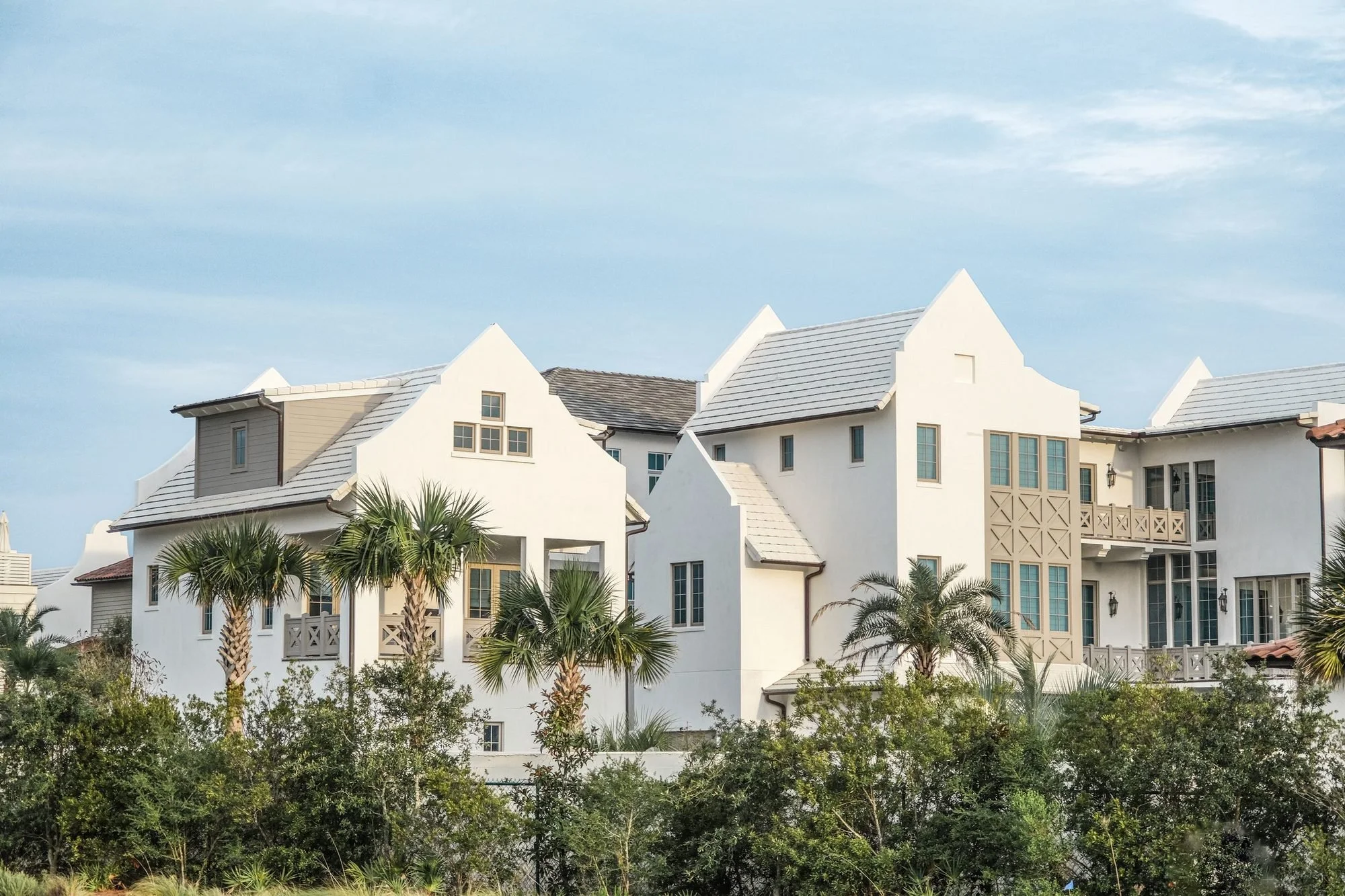
Florida's Property Tax Amendment Heads to the Ballot: What HJR 1-F Could Mean for Owners and Investors
The Legislature passed HJR 1-F on June 2, sending a major property tax amendment to November's ballot. Here's what it would change for homeowners and investors.
Property taxes are one of the biggest ongoing costs of owning a home or rental in Florida. On June 2, the Legislature passed a proposed constitutional amendment that could change them a lot, starting in 2027. During Special Session F, lawmakers approved CS/HJR 1-F, "Save Our Homes from Excessive Property Taxes". The House voted 75–26 and the Senate 30–9.
Nothing changes yet. A joint resolution goes straight to voters, and the amendment will appear on the November 2026 ballot. It needs approval from at least 60% of voters, and if it passes, it takes effect January 1, 2027. Here's what's in the enrolled text and what it could mean for homeowners, buyers and investors in Manatee and Sarasota.
A Much Larger Homestead Exemption
Today, a Florida homestead gets $25,000 off assessed value for all property taxes, plus an additional $25,000 (on assessed value between $50,000 and $75,000) for non-school taxes. Under the proposal:
School district taxes: the exemption stays at $25,000.
All other property taxes (county, city and other non-school levies): the exemption would rise to $150,000 of assessed value beginning January 1, 2027, and $250,000 beginning January 1, 2028. It would be adjusted for inflation starting in 2029.
The ballot summary says the amendment "requires, through general law, a schedule for full elimination" of homestead taxes for non-school levies. The text also directs the Legislature to create a uniform process for counties and cities to raise the exemption further for their own levies.
A simple illustration: Picture a homestead with an assessed value of $300,000. Today, about $250,000 of that is taxable for non-school levies. Under the amendment, it would be about $150,000 in 2027 and $50,000 in 2028. School taxes would still apply to $275,000. Your actual bill depends on your property's assessed value and local millage rates.
A Waiting Period for New Florida Residents
There's an important catch for people relocating here. Someone who had not maintained a permanent residence in Florida as of December 31, 2026 and establishes a homestead on or after January 1, 2027 would receive $25,000 for school levies and $50,000 for non-school levies at first. The full non-school exemption would kick in beginning with the fifth year of exemption.
If you're planning a move to Lakewood Ranch, Sarasota or Bradenton from out of state, talk with a tax professional about how this timing could affect you if the amendment passes.
A Lower Cap for Non-Homestead Property
This is the part investors and second-home owners should circle. Right now, assessments on non-homestead property, including rentals, second homes and commercial property, can rise up to 10% a year for non-school taxes. The amendment would lower that cap to 5% beginning January 1, 2027.
The cap doesn't follow the property forever. For residential property with nine units or fewer, a change of ownership still resets the assessment to just value the next year. In other words, a buyer would generally start fresh at market value, then benefit from the lower cap going forward.
Limits on How Local Governments Use Property Taxes
The amendment would also require counties and cities to use property tax revenue only for listed core purposes. These include public safety, education and schools, infrastructure and stormwater, natural resources and flood control, bond payments, retirement obligations, and county and municipal operations. How local governments respond, and what it means for services and other fees, is still an open question.
What This Means for You
Homeowners: If the amendment passes, homestead owners with higher assessed values could see meaningful savings on non-school taxes beginning with 2027 bills. Make sure your homestead exemption is filed and current.
Buyers: Remember that the amendment isn't law unless voters approve it. When budgeting for a purchase this year, use today's tax rules and treat any future savings as a bonus. If you're relocating, be aware of the proposed five-year phase-in for new residents.
Investors: The 5% cap could make future tax increases on rentals more predictable, but you'll still be reassessed at purchase. Underwrite your deals with taxes based on the purchase price, not the seller's current bill. That's always been true in Florida.
Sellers: Expect buyers to ask about this. Being able to explain the basics, and pointing them to official sources, builds confidence.
Stay Tuned Through November
A lot can be clarified between now and Election Day, including implementing legislation and analysis from state and local officials. I'll keep watching it, and I'm happy to walk through how today's rules affect a home you're considering. Call or text me at (941) 993-8311 or reach out through my contact page.
Luis Odon, REALTOR® Keller Williams Coastal Living II (941) 993-8311
This article is general information only and is not tax, legal or financial advice. It describes a proposed amendment that is not law unless approved by voters. Consult a tax professional and your county property appraiser about your situation. Equal Housing Opportunity.

Florida's New Condo Law (HB 913): What Changed July 1 for Owners, Buyers and Investors
Florida's HB 913 took effect July 1, giving condo associations more time and new ways to fund reserves. Here's what investors and buyers should watch.
Florida's condo rules changed again on July 1, 2025. House Bill 913 was signed into law in June. It took effect this week, and it gives condo associations, owners and buyers some breathing room and more flexibility after the tough reforms that followed the Surfside collapse.
If you own a condo as an investment, are thinking about buying one in Sarasota or Bradenton, or plan to sell a unit, here's what changed and what to watch.
The Big Headline: More Time for the SIRS
Under the prior law, many condo associations had to finish a structural integrity reserve study (SIRS) by December 31, 2024. According to the Legislature's final bill analysis, HB 913 extends that deadline to December 31, 2025 for affected associations. Associations that hadn't finished now have more time to get it done right.
The bill also clarifies that milestone inspections and SIRS requirements apply to buildings that are three habitable stories or more.
New Ways to Fund Reserves
This is the part investors will care about most, because it affects monthly dues and assessments. Per the bill analysis, HB 913:
Allows SIRS reserves to be funded with special assessments, lines of credit or loans, not just regular dues. Using these tools requires approval by a majority of the total voting interests.
Allows pooled reserve accounts and a baseline funding plan for the reserve schedule. That gives boards more options than funding every component separately.
Creates a temporary pause option. For budgets adopted on or before December 31, 2028, if the association completed a milestone inspection within the previous two calendar years, owners can vote (majority of total voting interests) to pause or reduce reserve contributions for up to two consecutive annual budgets. The goal is to put that money toward the repairs the inspection identified. A new SIRS is required afterward.
Raises the threshold for budget reserve items from $10,000 to $25,000, adjusted for inflation going forward.
Lets associations invest reserves in certificates of deposit or depository accounts without a vote of the owners.
For owners facing large increases, these changes may spread costs out over time instead of hitting all at once. They don't make the repairs cheaper, though. The work still has to be funded.
Budget, Meeting and Transparency Changes
A few more provisions worth knowing:
Substitute budget rule. If a proposed budget would raise assessments above 115% of the prior year, the board must also propose a substitute budget without discretionary spending.
Video-conference meetings are allowed, with recording requirements.
More time for financial reports. Associations have 180 days after the fiscal year ends, instead of 120, to deliver the annual financial report.
Online account with the state. All condo and co-op associations must create an online account with the Division of Florida Condominiums, Timeshares, and Mobile Homes by October 1, 2025, to provide requested information.
Websites for more associations. Starting January 1, 2026, the requirement to post key documents online expands to associations with 25 or more units, under the 2024 law as amended.
Insurance appraisals. Replacement-cost values used for association insurance must be updated at least every three years.
Hurricane protection and evacuations. The bill limits when an association can charge an owner for removing or reinstalling hurricane protection. It also requires condo properties to be evacuated under any evacuation order for the area, not just mandatory ones.
What This Means for Condo Investors in Manatee & Sarasota
Underwrite the building, not just the unit. Before you buy, ask for the SIRS (or its status), the milestone inspection summary if one applies, the current budget, reserve balances, and any approved or proposed special assessments, loans or lines of credit. With the new financing options, an association could take on a loan that owners repay over time. That's a real cost in your cash-flow math.
Watch for pauses. A building that pauses reserve contributions to fund repairs may have lower dues today, but the pause has an end date and a new study afterward. Plan for dues to rise again.
Read the meeting minutes. Boards are making big decisions about funding methods right now. Minutes often tell you more than the budget.
For Sellers
If you're selling a condo, ask your association now where it stands on the SIRS, inspections and funding plan. Buyers, their lenders and their insurers will want those answers, and a seller who has them ready keeps the deal moving.
For Buyers
This law doesn't remove the need for due diligence. If anything, more funding options mean more variety from building to building. Two similar units in the same neighborhood can have very different financial pictures.
Let's Read the Documents Together
Condos can be great opportunities. The key is knowing exactly what you're buying into. If you're considering a condo in Manatee or Sarasota, I'll help you request and review the right documents. Call or text me at (941) 993-8311 or reach out through my contact page.
Luis Odon, REALTOR® Keller Williams Coastal Living II (941) 993-8311
This article is general information only and is not legal or financial advice. It summarizes the Legislature's bill analysis; consult a Florida attorney or your association's professionals about your specific building. Equal Housing Opportunity.
The Market Pulse
One email a month with the numbers that move Lakewood Ranch, Bradenton, Sarasota, Parrish and Palmetto real estate: mortgage rates, prices, inventory, and what they mean for buyers, sellers and investors. Sourced data, no spam.
By subscribing, you agree to receive the monthly Market Pulse email from Luis Odon, REALTOR®, Keller Williams Coastal Living II. Unsubscribe anytime.